
Who Sells Native Cigarettes Near Me? A Guide to Reserve Smoke Shops Across Canada

Across Canada, thousands of Canadians turn to Indigenous-operated smoke shops to purchase native cigarettes for their affordability and accessibility. If you’re not caught up to speed on how buying native cigarettes works, don’t worry. In this comprehensive guide, we’ll walk you through everything you need to know on how to buy native cigarettes near you, including helpful tips on where to find the nearest reserve smoke shop and special rules associated with buying native cigarettes.


What Are Native Cigarettes?

Native cigarettes are tobacco products manufactured and sold by Indigenous-owned businesses, often located on First Nations reserves. These cigarettes are typically:

These smoke shops are not just a retail outlet; they are also an expression of Indigenous economic sovereignty and self-determination. Tobacco products can be incredibly lucrative and promote a circular economy.


Are Native Cigarettes Legal in Canada?

Yes, native cigarettes are legal to manufacture and sell, especially when operating on First Nations reserves under Indigenous jurisdiction.

However, here’s what you need to know:

  • Tax Exemption: Status Indians are permitted to purchase tobacco tax-free on the reserve.
  • For Non-Status Buyers: It’s a legal grey area. Many non-status Canadians purchase native cigarettes through online or in-person shops operating on reserve. Enforcement is limited due to the jurisdictional complexities of Indigenous sovereignty.
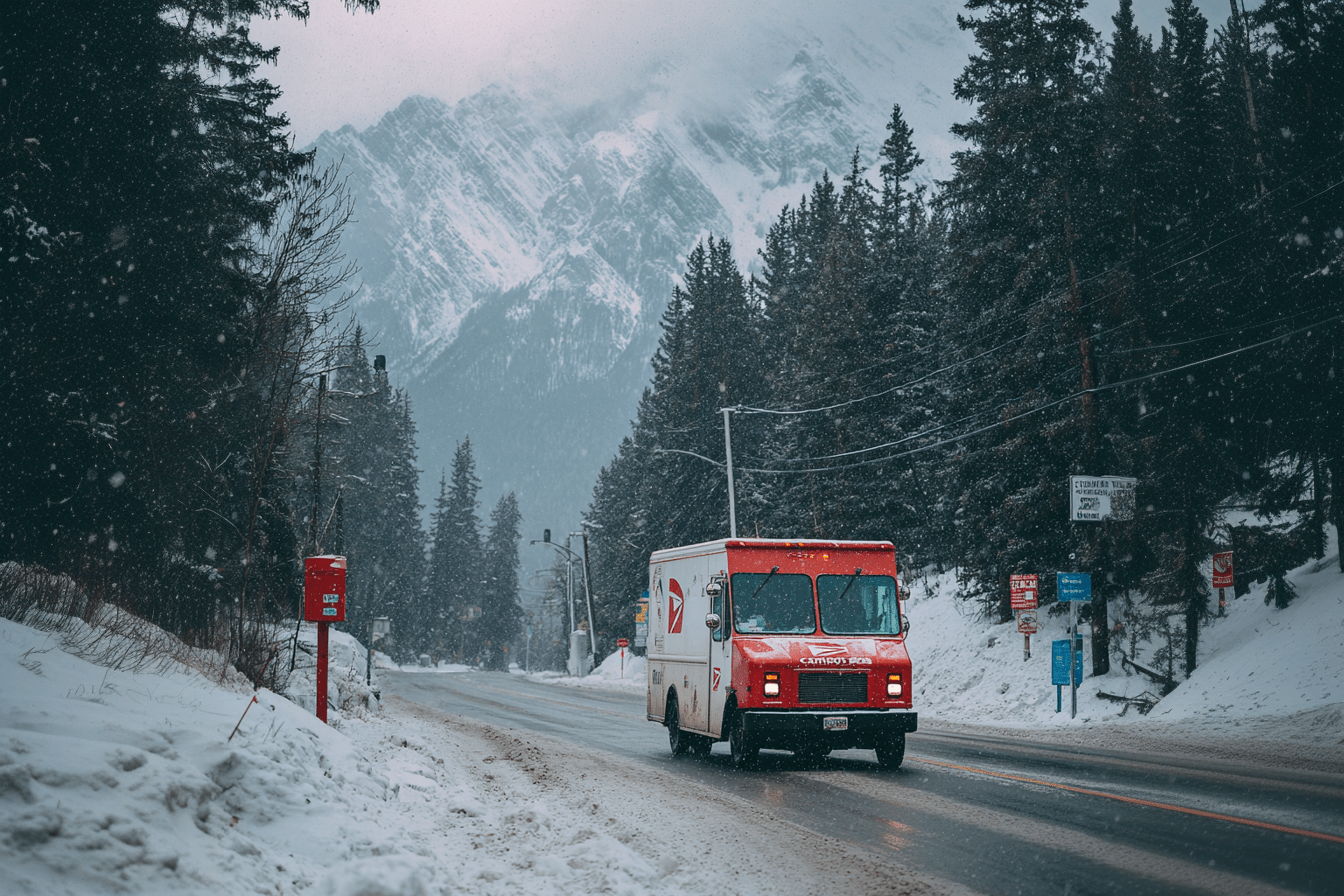
  • Shipping: Native-owned stores that operate online often ship cigarettes across Canada using plain, discreet packaging via Canada Post, Purolator, or UPS.

Despite being in a legal grey zone, many of these businesses operate transparently and consistently with community and provincial regulations.

Wondering more about the legality of buying native cigarettes? Make sure you read this article.


Brief History of Native Smoke Shops in Canada

The rise of native tobacco economies began in the late 20th century, particularly in Ontario and Quebec. First Nations began exercising their inherent rights to produce and sell tobacco as a means of economic development.

Key milestones include:

  • 1980s–1990s: The growth of on-reserve tobacco manufacturing, including brands like DK, Canadian, and Sago.
  • 2000s: Tensions increased between provincial governments and Indigenous communities over tax collection and regulation. In response, many First Nations doubled down on asserting tobacco as a sacred, sovereign commodity.
  • 2010s–Today: Many reserves now operate licensed smoke shops with quality manufacturing equipment, secure shipping logistics, and online platforms serving customers across the country.

Native smoke shops continue to boost local economies, create jobs, and assert Indigenous self-governance.


Native Reserves With Smoke Shops (By Province)

Wondering who sells native cigarettes near me? Here’s a breakdown by province of reserves known for their smoke shops:


Ontario

Ontario is home to some of the largest native smoke shop hubs in Canada.


Quebec

Quebec’s Mohawk reserves are known for widespread native tobacco availability.

  • Kahnawake (near Montreal)
    • Dozens of shops in a compact area
    • Popular with Montreal-area residents
  • Kanesatake (Oka area)
    • Historic reserve with several roadside smoke shops
  • Listuguj and Gesgapegiag (Gaspé Peninsula)
    • Eastern Quebec reserves with local tobacco outlets

British Columbia

Though fewer in number, BC has several Indigenous reserves offering tobacco:

  • Osoyoos Indian Band (Okanagan area)
    • Known for Indigenous economic development
    • Some authorized tobacco sales in band-operated outlets
  • Seabird Island (Fraser Valley)
    • On-reserve shops sell tobacco products to local residents

Alberta


Saskatchewan


Manitoba


Nova Scotia / Atlantic Provinces


How to Buy Native Cigarettes Online in Canada

If you don’t live near a reserve, many Canadians choose to buy native cigarettes online. A quick Google search should return a dozen options. Because the native smoke shop industry is largely unregulated and often doesn’t accept major credit cards, be vigilant about where you’re buying your native cigarettes from. Read verified reviews and try sending a test email to the customer support contact to see if someone responds. Before placing a huge order, try placing a smaller order first to see if you receive it. The last thing you want is to be out hundreds of dollars because you trusted the wrong site.

At Cigarette Express, we ship cigarettes anywhere in Canada with no minimum spend and free shipping on orders over $199+. Check out our reviews on Trustpilot from real customers!

Here’s what to expect from Cigarette Express:

  • Secure E-transfer payment
  • Discreet fast shipping via Canada Post or UPS
  • Pack, carton and bulk purchase options
  • $34.99 cartons (roughly 10% cheaper than leading competitors)
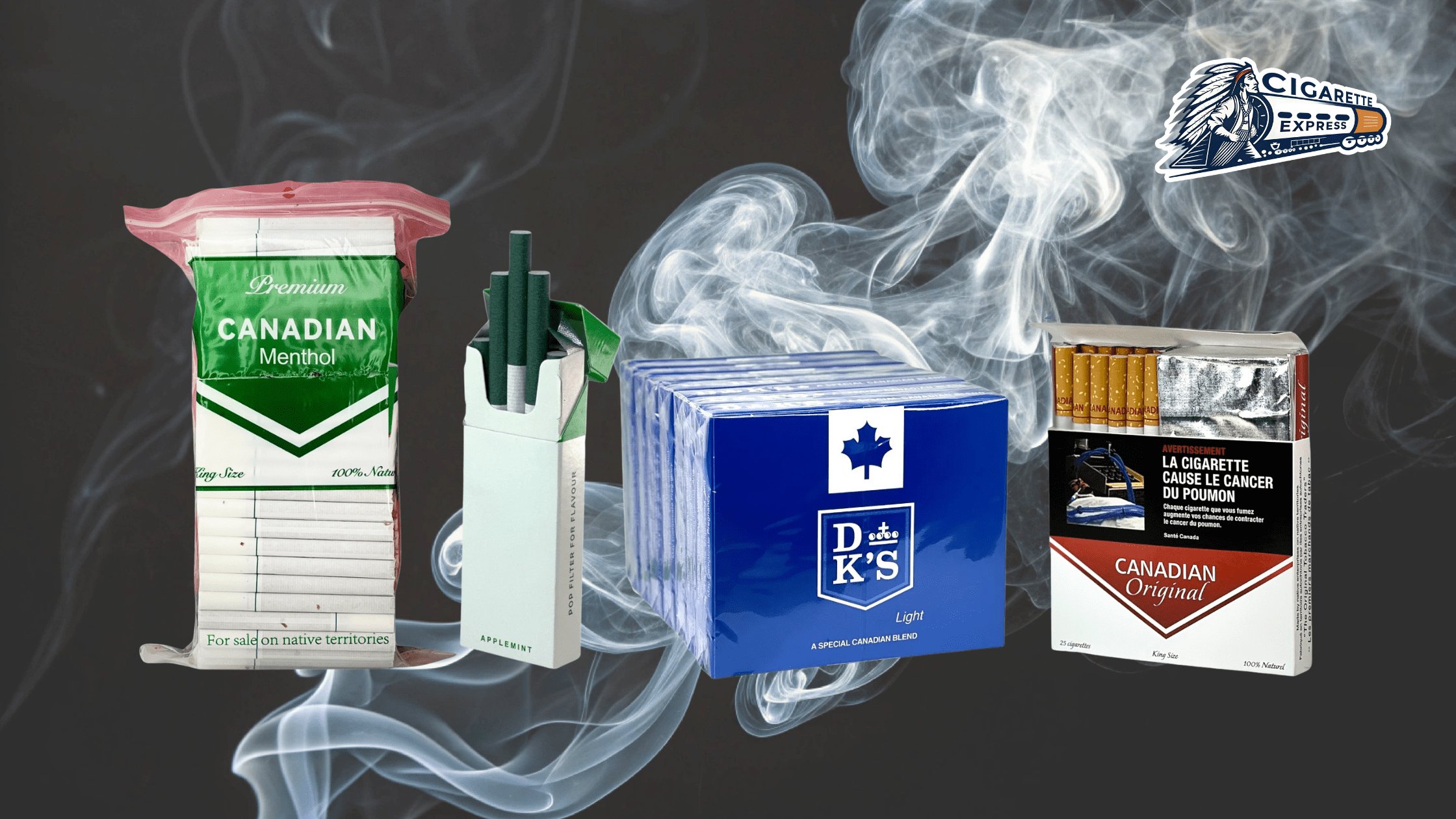
  • Native brands like BB, Time, Canadian, Canadian Goose, Signal, Playfares, DKs and Discount

Cigarette Express Serves the Following Provinces & Territories

Enjoy convenience online shopping and quick shipping coast to coast from Cigarette Express!

Buy Cigarettes Near Me Alberta

Buy Cigarettes Near Me British Columbia (BC)

Buy Cigarettes Near Me Manitoba

Buy Cigarettes Near Me Ontario

Buy Cigarettes Near Me Nova Scotia

Buy Cigarettes Near Me Newfoundland and Labrador

Buy Cigarettes Near Me New Brunswick (NB)

Buy Cigarettes Near Me Northwest Territories

Buy Cigarettes Near Me Prince Edward Island (PEI)

Buy Cigarettes Near Me Quebec

Buy Cigarettes Near Me Saskatchewan

Benefits of Buying Native Cigarettes

  • Lower Prices – Up to 70% cheaper than convenience stores
  • Support Indigenous Economies – Your purchase helps build self-reliant communities
  • Bulk Deals – Most online retailers offer bulk/volume discounts on cartons.
  • Convenience – Get it delivered straight to your door.

FAQs About Native Cigarettes in Canada

Q: Are native cigarettes legal in Canada?
A: Yes, for First Nations individuals on-reserve. For non-status individuals, it’s a legal grey area. Enforcement is limited due to Indigenous sovereignty.

Q: Can I buy native cigarettes online in Canada?
A: Yes. Many First Nations retailers operate online stores with secure payment and use major mail carriers to ship out orders.

Q: What brands are considered native cigarettes?
A: Popular brands include Canadian, BB, Discount, Putter’s, Time, Signal, Nexus, Elite, and DK.

Q: How much do native cigarettes cost?
A: The average price per carton is $50. Buying in bulk usually brings down the price per carton at many retailers. At Cigarette Express, we have no minimum bulk buy-ins and offer cartons starting at only $34.99, some of the most affordable on the online market.

Q: Do native cigarettes have the same health risks?
A: Yes. They contain tobacco and nicotine, and pose the same health risks as mainstream cigarettes. They are known for having fewer additives.


Final Thoughts: Where to Find Native Cigarettes Near Me

Whether you’re in Ontario, Quebec, Alberta, or Nova Scotia, there’s likely a native reserve near you that sells tax-free or tax-reduced tobacco products.

If you’re not close to a reserve, ordering online from a 100% Indigenous-owned retailer like Cigarette Express is the next best thing. Many native brands have earned an earnest spot in the Canadian cigarette market by being reliable and tasting on par with domestic brands.

Save up anywhere from hundreds to thousands of dollars per year by buying native cigarettes whilst supporting Indigenous economies. 


Sources & References

  1. Indigenous Services Canada. (2023). Tobacco Control on Reserve.
  2. Assembly of First Nations. (2019). Economic Impact of Indigenous Tobacco.
  3. Government of Canada. (2022). Indian Act and Tax Exemption Guidelines.
  4. CBC News. (2021). The Sovereignty of Smoke: Indigenous Tobacco and the Law.
  5. Globe and Mail. (2022). First Nations Tobacco Industry Thrives Amid Legal Ambiguity.
  6. Native Economic Development Journals. (2020). Akwesasne and Tyendinaga: Case Studies in Indigenous Tobacco Trade.

Is it Legal to Buy Cigarettes Online?

There’s been explosive growth in the Canadian cigarette industry over recent years, and how it’s happening may or may not come as a surprise. Online smoke shops have popped up at unprecedented rates, many advertising lowball prices for Canada’s favourite cartons and several Indigenous-made variants. For smokers, this new way of purchasing cigarettes has been considered the ultimate life hack, with average savings totalling close to 50-70% –but is it too good to be true? In today’s article, we will discuss the legality of buying cigarettes online and answer the Internet’s most in-demand question: Is it legal to buy cigarettes online in Canada?

General Rules about Buying Cigarettes

Canada has very tight regulations pertaining to the sale and purchase of cigarettes. These are enforced through the Tobacco and Vaping Product Act (TVPA), which regulates the manufacturing, sale, labelling, and advertising of tobacco products in Canada. 

Under the TVPA:

  • Tobacco products can be sold only in packages containing the prescribed number of cigarettes (a minimum of 20 sticks per pack).
  • Sales must include age verification at the point of sale.
  • Products must comply with labelling requirements and be accompanied by health warnings.

The law does not automatically ban online sales of cigarettes, but it establishes that sellers must comply with these rules, regardless of the sales channel.

Is it Legal to Buy Cigarettes Online in Canada?

Yes, it is generally legal for adults to buy cigarettes online in Canada, provided that several legal conditions are met:

  1. You are of legal smoking age in your province or territory (usually 18 or 19+).
  2. The retailer is legitimate and compliant with federal and provincial tobacco laws.
  3. Age verification is conducted before sale.
  4. Taxes and excise duties are properly collected and applied when required.

The short answer is yes: it is legal to buy cigarettes online in Canada, provided you use a compliant, verified retailer and meet all applicable legal requirements.

Provincial Variations in Law and Enforcement

While federal laws set the baseline, each province and territory can also regulate cigarette sales, which may impact online purchasing.

Key Considerations by Province

  • Age Requirements:
    Legal smoking age varies by province — for example, 18 years old in Alberta, Saskatchewan, and Quebec, and 19 in Ontario and British Columbia.
  • Shipping Restrictions:
    Some provinces, like Quebec, have specific requirements for tobacco sales that could impact internet commerce. This means even if federal law allows online sales, local regulations must also be followed.
  • Tax Collection:
    Provincial tobacco taxes vary and must be included in legally compliant sales. To learn more about how taxes affect the final pack price, read this blog article.

Exceptions: Native Cigarettes

Another layer of complexity is the sale of native cigarettes (tobacco products manufactured or sold by Indigenous communities under treaty rights). These products often have different tax treatments, but legal purchase still depends on the buyer’s status and the retailer’s compliance.

To stay within the law:

  • Always buy from a licensed online retailer that clearly states compliance with Canadian tobacco laws.
  • Ensure products include proper provincial excise stamps when required.
  • Check that age validation processes are in place.

Many Canadians turn to online native smoke shops every day to get their cigarettes. Although the legality of doing so belongs in the grey area, it is difficult for authorities to do anything about it. Transactions that occur on these websites are usually conducted through secure Interac E-transfer or cryptocurrency, and shipped discreetly through plain packaging via Canada Post, UPS, or Purolator. Because it’s illegal to open someone’s mail in Canada, these shipments often go undetected.

Online native smoke shops often operate in sovereign Indigenous territory, which means they are exempt from normal tobacco regulations and taxes. Many of the tobacco products they carry are Indigenous-manufactured and owned; this is why they’re able to sell cigarettes at a much lower price. Most native cigarette brands still follow typical labelling rules like plain packaging and health warnings, and a minimum of 20 cigarettes per pack. The only thing that is different is the exemption of taxes on the final sale– status natives and native-owned businesses do not pay taxes to the Canadian government.

Many native smoke shops now operate 100% online– providing unprecedented access to Canadians nationwide. Before moving online, many Canadians would still buy smokes on reserves, often without any enforcement from local authorities.

Bottom line: To stay 100% compliant with the law, it is recommended that to buy native cigarettes online or offline, you must be a status Indian and be within the legal purchasing age. However, it’s very difficult for the government to keep track of the sale of cigarettes through unregistered channels like First Nations-owned smoke shops. Most Canadians can buy cigarettes online from online smoke shops like Cigarette Express with minimal risk and hassle.

Age Verification and Legal Compliance

One of the most important legal requirements for selling cigarettes online in Canada is age verification. Without proper ID checks, a retailer cannot legally complete a sale of tobacco products.

Legitimate online retailers use:

  • Digital age‑verification tools
  • Government ID submission
  • Signature upon delivery requirements

These steps help prevent sales to minors and protect the retailer from liability.


What’s Not Legal When Buying Tobacco Online

Even though many online transactions are legal, certain actions remain illegal under Canadian law:

Buying Untaxed or Contraband Tobacco

Possessing, buying, or selling untaxed cigarettes is illegal in most provinces. Violations can result in fines or seizures of the products.

Importing Cigarettes Without Authorization

Bringing cigarettes from foreign websites that don’t follow Canadian laws is prohibited. Importing personal tobacco purchases without duties, taxes, and proper packaging can lead to goods being seized by customs.


How to Buy Cigarettes Online in Canada — Safely and Legally

Here are the essential steps to ensure your online cigarette purchase is both safe and compliant:

1. Choose a Reputable and Licensed Retailer

Use retailers that:

  • Display licensing and compliance statements
  • Require age verification before checkout
  • Include tax and excise duties where applicable
    Always verify retailer legitimacy before purchasing.

2. Verify Your Age

Expect to prove your age at checkout through ID verification or digital age-check software.

3. Check Provincial Rules

Different provinces may have additional requirements — especially around shipping and taxes.

4. Confirm Packaging Compliance

Legally sold cigarettes must include government health warnings and excise stamps when required.

5. Be Cautious of Contraband Offers

Avoid “cheap smokes” that lack proper labelling or tax stamps — these are likely illegal contraband products.


Buying Native Cigarettes Online — What You Should Know

Native cigarettes (e.g., products manufactured by Indigenous communities) often operate under different legal frameworks. They can be legal when:

  • Sold by Indigenous businesses
  • Compliant with federal and provincial rules
  • Proper excise and tax duties are addressed when applicable

Non‑status consumers buying Native cigarettes online should verify that the retailer adheres to Canadian law.


Summary: The Legal Landscape for Online Cigarette Purchases

Here’s a clear breakdown:

Legal ScenarioIs It Legal?Notes
Buying from a licensed Canadian online retailerYesMust verify age, include taxes, comply with TVPA
Buying cigarettes online from unregulated sellerNoRisk of illegal contraband
Importing cigarettes from foreign siteNoCustoms, tax evasion issues
Buying Native cigarettes online DependsMust be a compliant retailer or status sales

Final Thoughts: Is it Legal to Buy Cigarettes Online?

So, is it legal to buy cigarettes online in Canada? Yes, when done through a licensed, compliant retailer and with full adherence to provincial and federal laws. Age verification, proper taxes, valid excise stamps, and retailer compliance are essential.

Online purchasing can be legal, convenient, and safe. It’s up to the prerogative of the buyer to choose reputable retailers and understand the regulations that apply based on their province. With the right approach, adult smokers in Canada can confidently purchase cigarettes online without legal risk.

Buying native cigarettes for many is a tax loophole, but not many native retailers are compliant with Canadian tobacco regulations, specifically with the taxes. As many Indigenous retailers operate on sovereign land, it may exempt them from the same tax laws. Plus, many of them don’t require government ID submission for ID checks. Buying native cigarettes is still considered a grey area, and Canadians who buy their native cigarettes tax-free should do so at their own risk.


Sources

Government of Canada. (n.d.). Regulating tobacco and vaping products. Health Canada. Retrieved January 13, 2026, from https://www.canada.ca/en/health-canada/services/smoking-tobacco/regulating-tobacco-vaping.html

Government of Ontario. (n.d.). Contraband tobacco. Ontario.ca. Retrieved January 13, 2026, from https://www.ontario.ca/document/tobacco-tax/contraband-tobacco

Government of Canada. (n.d.). Tobacco use and quitting smoking. Health Canada. Retrieved January 13, 2026, from https://www.canada.ca/en/health-canada/services/smoking-tobacco/quit-smoking.html

Government of Canada. (n.d.). Labelling and packaging requirements for tobacco products. Health Canada. Retrieved January 13, 2026, from https://www.canada.ca/en/health-canada/services/smoking-tobacco/regulating-tobacco-vaping/labelling-packaging.html

Campaign for Tobacco-Free Kids. (n.d.). Canada: Overview of tobacco control legislation. Tobacco Control Laws. Retrieved January 13, 2026, from https://www.tobaccocontrollaws.org/legislation/canada

Canada Border Services Agency. (n.d.). Importing tobacco products. Government of Canada. Retrieved January 13, 2026, from https://www.cbsa-asfc.gc.ca/import/menu-eng.html

Native Smokes Guide: Where to Find the Cheapest Smokes in Canada

If you smoke in Canada, you already know the sting at the till. Last time, we discussed how much a pack costs in Canada. With prices in the high teens, it’s no wonder that more people are asking:

“Where can I find the cheapest smokes in Canada?”

Truthfully, for many smokers, the lowest prices usually come from native smokes cigarettes produced by Indigenous manufacturers on First Nations land — either on-reserve or through Indigenous-owned online shops. These products often avoid or reduce certain taxes, which is why they can be drastically cheaper than big-brand cigarettes sold at gas stations and convenience stores. Did you know that taxes make up a bulk of the price tag on cigarettes? If that doesn’t sound ideal to you, this guide will walk you through:

  • What native smokes are and why they’re cheaper
  • How on-reserve smoke shops work
  • How Indigenous-owned online retailers operate
  • How Cigarette Express fits into the landscape
  • Legal and health considerations you shouldn’t ignore

Buckle up, and get ready to learn the life hack that so many Canadians have come to rely on.


A quick disclaimer

This guide is about pricing and access, not an endorsement of smoking. Native smokes carry the same health risks as any other cigarettes: cancer, heart disease, and lung disease, among many others. Lower cost doesn’t mean lower harm. 

It’s also important to follow Canadian federal and provincial laws around tobacco, taxation, and importation, and to purchase only from reputable, legal sellers.


What Are Native Smokes?

native smoke cartons
Native Smokes Guide: Where to Find the Cheapest Smokes in Canada 11

Native smokes (also called reserve cigarettes or Indigenous cigarettes) are tobacco products:

  • Produced by Indigenous-owned manufacturers
  • Typically made on First Nations reserves
  • Often sold through on-reserve shops or Indigenous-owned online stores

Under Section 87 of the Indian Act, registered First Nations individuals are exempt from certain federal and provincial taxes on goods purchased or produced on reserve, and that can include tobacco. 

Because of this tax structure, native smokes:

  • Often exclude some or all of the usual tobacco taxes
  • Are sold through independent, Indigenous-controlled distribution networks
  • Frequently sell at prices that are far below fully taxed retail brands

Despite a persistent myth that they’re “knock-offs,” many First Nations tobacco companies maintain strict manufacturing standards, using Canadian-grown tobacco and modern rolling/packaging lines. 


Are Native Smokes Worse in Quality?

Do cheaper smokes mean they are lower in quality? The answer may be subjective

Many Canadian smokers are used to smoking premium imports like Marlboro or DuMarier. These brands have been around for close to a century and benefit from the billions of dollars spent on R&D and manufacturing by Big Tobacco companies. The result is a classic and consistent cigarette that many have come to love and rely on.

Native smokes are about 70% cheaper than imports, but does that mean they are worse in quality? Not quite. Although native smokes haven’t been around for as long and aren’t funded by mega corporations, they are manufactured with Canadian preferences in mind, and some brands use high-quality domestic tobacco that is on par with what they use in higher-end regular brands. 

Because Indigenous manufacturers are exempt from paying certain taxes, they can put the dollar back in the customer’s pockets or invest more in R&D. However, they do not benefit from the same manufacturing finesse that is only possible for larger-scale operations.

Today, the native smokes market is flourishing, as more Canadians find out about it. This has produced many winners that are exclusively native-made, some that come to mind include: Canadian cigarettes, Rolled Gold, BB cigarettes, and Canadian Goose. These brands are consistently compared to more non-native premium cigarette brands.


Why Are Native Smokes So Much Cheaper

If you’re comparing prices, the difference between regular retail cigarettes and native smokes can be substantial. Several factors explain that gap. 

1. Taxation differences

For regular retail cigarettes, taxes make up most of the shelf price. You pay:

  • Federal excise duty
  • Provincial tobacco tax
  • GST/HST/PST on top of those

Indigenous businesses operating on reserve may be exempt from some of these taxes, especially when selling to status First Nations customers on reserve. That tax relief is the single biggest reason native smokes are cheaper.

2. Lower overhead and independent distribution

Many Indigenous brands:

  • Have leaner operations
  • Use independent distribution instead of big corporate chains
  • Spend less on national advertising

3. Unique regulatory environment

Indigenous communities negotiate their own arrangements and regulations around tobacco production and sale. The regulatory framework is different than mainstream commercial tobacco, which can affect how duties and taxes apply, especially for on-reserve transactions. 


On-Reserve Native Smokes: The Cheapest Smokes In Person

native cashier handing customer a pack of cigarettes in a tobacco shop
Native Smokes Guide: Where to Find the Cheapest Smokes in Canada 12

If you live near a First Nations community, on-reserve smoke shops are often the cheapest place to buy smokes in person.

These can include:

  • Band-run convenience stores
  • Standalone smoke shacks
  • Fuel stations with tobacco counters

How on-reserve pricing works

On many reserves:

  • Cigarettes produced and sold on reserve may be sold with reduced or no provincial tobacco tax for eligible customers.
  • That means the price you see on the carton is mostly tobacco + production + modest margin, rather than layers of tax.

However, there are important caveats:

  • Rules vary by province and by status. In some provinces, non-status customers are not allowed to buy tax-exempt products at all.
  • Local enforcement and licensing differ, and some off-reserve sales of untaxed cigarettes are explicitly illegal.

Always check what is allowed in your province before treating on-reserve shopping as a universal “hack.” An easier way to get access to native cigarettes without leaving your home is to buy cigarettes online from Cigarette Express. We ship discreetly in plain packaging and offer secure checkout with Interact e-transfer. 

What to expect at an on-reserve smoke shop

Depending on the community, a typical visit might involve:

  • A simple storefront with a wall of brands you won’t see in big-box stores: Mohawk, Canadian Goose, Sago, DK’s, Putters, Dumont, and more.
  • Options for full flavour, light, menthol, king-size, and sometimes flavored or slim variants
  • Cartons as the standard unit (individual packs are less common in some shops)
  • Cash, debit, or e-Transfer; fewer places accept credit card terminals

Pros of buying on reserve:

  • Often the very lowest price per pack or per carton
  • Supports local Indigenous communities and employment
  • Easy to stock up if you live nearby

Cons:

  • Not everyone lives near a reserve
  • Rules may limit what non-status buyers can legally purchase
  • You must physically travel there, which isn’t practical for everyone

Online Native Smokes: Cheapest Smokes Delivered Across Canada

red and white delivery truck driving across a snowy road
Native Smokes Guide: Where to Find the Cheapest Smokes in Canada 13

If you don’t live near a reserve, online Indigenous-owned smoke shops have become a major source of cheaper smokes. More of these have popped up in recent years. Online native smoke shops have become a great option for those who live in provinces where smokes are more expensive, or the weather conditions make it so that driving to a store is inconvenient.

These sites typically:

  • Operate from tax-exempt Indigenous land
  • Ship across Canada via Canada Post, UPS, Purolator, etc.
  • Accept Interac e-Transfer or cryptocurrency as the primary payment method
  • Emphasize that they’re Indigenous-owned and operated and that proceeds support First Nations communities

Why online native smokes are so popular

For many smokers, online native smokes offer a modern solution to their expensive habit. There are no restrictions on how many cartons you can buy – in fact, quite the opposite. Many Indigenous smoke shops will offer steeper discounts as you buy more cartons. The main factors why online native smokes have seen a surge in popularity:

  • Price: Potential for significant savings because of tax exemption
  • Convenience: Most retailers offer shipping through Canada Post, Purolater or UPS
  • Variety: Plenty of native and Canadian brands to choose from
  • Bulk rates: Many offer steeper discounts as you buy more
  • Privacy: No need to show ID to purchase. Most retailers take E-transfer or cryptocurrency

As cigarette prices keep rising, online smoke shops present a golden opportunity to stave off inflation and tax increases by the government. With online shopping becoming more the norm, buying your cigarettes online just makes sense.


Cigarette Express: Cheapest Smokes Online, No Bulk Minimum

signal 2025 10 27 114259 006
Native Smokes Guide: Where to Find the Cheapest Smokes in Canada 14

Within that online landscape, Cigarette Express occupies a specific niche:

  • Cheapest smokes online (positioned to undercut most convenience-stores and native retailers online)
  • No minimum bulk buy-in — you don’t need to commit to 5, 10, or 25 cartons to get fair pricing

This “no minimum bulk” structure is a greatly beneficial from a customer’s perspective:

  • Many online native smoke shops structure their best prices around large-volume purchases (5+ or 10+ cartons), and sometimes even adjust shipping fees by volume.
  • With Cigarette Express, you can order a single carton at a strong price, instead of being forced into a bigger cash outlay just to access “wholesale-style” savings.

When Cigarette Express makes the most sense

Cigarette Express is particularly attractive if:

  • You’re price-sensitive but don’t want to order 10+ cartons at once
  • You like trying different brands without committing to massive bulk. They have Mix and Match Deals for their bestselling brands, like Canadian.
  • You want to hit the free shipping threshold at a much lower amount (most retailers do $299+, Cigarette Express is $199+)

How Much Can You Actually Save With Native Smokes?

native smokes vs regular smokes price comparison graphic
Native Smokes Guide: Where to Find the Cheapest Smokes in Canada 15

On average, you can expect to save at least 50% on cigarettes when you buy from a native smokes retailer (whether that be online/offline). Certain factors affect how much you save:

  • Brands: Whether you’re comparing a native smokes brand to a premium or budget brand. You’ll save more if you’re used to smoking premium imports like Marlboro.
  • Where you live: The cost of a cigarette pack depends on where you live. Each province has their own tax rate for cigarettes.
  • Retailers: Costs will vary between different retailers.
  • Habit: It’s most cost-effective for regular smokers

If you’re a regular smoker, you’re poised to save a significant amount by buying native smokes. The barrier for most people is actually driving onto the reserve, but with the rise of online smoke shops, this is no longer an issue. Regular smokers can save anywhere from hundreds to thousands of dollars a year by switching to native smokes.


Legal & Safety Considerations (Read This Part)

When you start researching “cheapest smokes in Canada,” you’ll quickly find a mix of:

  • Legitimate, Indigenous-owned retailers
  • Grey-area operations
  • Outright contraband sellers

An independent report on contraband tobacco in BC, Ontario, and Newfoundland notes that some online “native brand” websites are operated off-reserve in violation of Canadian law, selling untaxed cigarettes across Canada without authorization. 

Key legal points to keep in mind

  • Native smokes are legal when produced, sold, and purchased in accordance with First Nations tax exemption laws and provincial tobacco regulations.
  • It can be illegal to buy or possess untaxed cigarettes in some provinces if you are not entitled to the exemption, or if you buy from unlicensed or off-reserve sellers.
  • Reselling native smokes off-reserve without proper licensing or tax remittance can expose you to fines, product seizures, and criminal charges.

How to spot a trustworthy online native smokes retailer

To reduce risk, look for:

  • Clear indication that the business is Indigenous-owned and operating from reserve or tax-exempt land
  • A real physical location, not just a PO box, plus valid contact details
  • Transparent shipping policies, including realistic timelines and trackable shipping carriers
  • Age verification and clear disclaimers about legal purchase and use
  • Reasonable price ranges — deals that look impossibly cheap may be counterfeit or contraband
  • Verified reviews from real customers

Cigarette Express is a retailer that is:

  • 100% owned and operated on Indigenous territory
  • Verifies age and complies with Canadian shipping rules
  • Smooth checkout complete with Interact Etransfer
  • Has real reviews via TrustPilot
  • Ships through Canada Post or Purolater with tracking information 

Are Native Smokes “Better” or “Safer”?

health warning
Native Smokes Guide: Where to Find the Cheapest Smokes in Canada 16

Native smokes are not healthier or safer to smoke than regular cigarettes. Native smokes still contain combustible tobacco, chemicals, nicotine and tar and carry the same risks of cancer, heart disease, stroke, COPD, and addiction as any other cigarette. The lower price is a function of tax policy and economics, not reduced harm. Cheaper native cigarettes should never be interpreted as a safer choice; they’re simply part of a different regulatory and economic framework. 

In some cases, cheaper smokes may not be conducive to people trying to cut back on smoking for health reasons due to their affordability. If you are concerned about your health, the best savings will always come from cutting down or quitting entirely, not just switching brands.


Choosing the Right Native Smokes for You

cigarette express products
Native Smokes Guide: Where to Find the Cheapest Smokes in Canada 17

If you’ve decided you’re going to buy native smokes, and you’re looking for the cheapest smokes in Canada, you still want something you enjoy smoking.

Here are some factors to consider:

1. Strength and profile

  • Full flavour vs. light: Heavier throat hit and body versus smoother, milder smoke
  • Menthol vs. regular: Cooling sensation vs. straight tobacco
  • Filter type: Regular filter, charcoal filter, slim vs. king size

2. Brand reputation

Look for brands that are:

  • Known for consistent burn and quality control
  • Widely stocked across different Indigenous retailers
  • Positively reviewed by other smokers (smoothness, burn rate, taste)

Many Indigenous brands now rival or surpass mainstream brands in terms of taste and smoothness, especially for smokers who prefer less chemical-tasting tobacco. 

3. Buying format

  • Single Packs – Best if you don’t want to commit to just one brand or occasional smokers
  • Single cartons — Save more per pack
  • Multi-carton orders — better per-carton pricing, especially with shops that offer tiered discounts or free shipping at certain thresholds

Again, this is where Cigarette Express can stand out: you don’t have to commit to huge bulk orders to access competitive pricing, which is ideal if you’re still figuring out your favourite native brand. Most cartons cost $34.99 flat.


Native Smokes Guide Recap: Where to Find the Cheapest Smokes in Canada

Finding cheap smokes in Canada isn’t hard– you just need to know where to look. If you’re reading this, you’re probably ahead of the game. To sum it up, your best bet of finding the cheapest smokes is through buying them on reserves or through online Indigenous smoke shops.

  1. On-reserve smoke shops
    • Lowest in-person prices
    • Best if you live close to a First Nations community and understand the local rules
    • Directly supports Indigenous economies
  2. Indigenous-owned online native smokes retailers
    • Deliver across Canada, usually with tax-free or reduced-tax pricing
    • Offer wide brand selection and bulk options
    • Require careful vetting to avoid contraband or off-reserve illegal operations
  3. Cigarette Express
    • Positioned as offering the cheapest smokes online
    • No minimum bulk buy-in — strong pricing even if you only want a single carton
    • Great option for smokers who want native/native-style smokes at aggressive prices without hanging hundreds of dollars on huge orders
  4. Duty-free & travel allowances
    • May offer short-term savings for travellers, but  is limited by quantity and strict rules
    • Not a practical ongoing source for most smokers

Native smokes exist at the intersection of Indigenous rights, taxation policy, economics, and consumer demand. They’re cheaper not because they’re of lesser quality, but because they sit in a different legal and economic lane than heavily taxed mainstream brands. Despite the fact that native smokes are cheaper, it doesn’t mean they are any better or healthier for you than regular smokes. Smoking always carries health risks–so buy at your own risk! If you’re a regular smoker, buying smokes on reserve may be the cheapest option, but in terms of convenience and guarantee, you can save a hefty amount just by buying online. Check out Cigarette Express for the cheapest cartons online with no bulk minimum buy-ins!

Sources

Canada Revenue Agency. (2024). Excise duty rates—Tobacco products. Government of Canada. https://www.canada.ca/en/revenue-agency/services/forms-publications/publications/edrates.html

Government of Canada. (2024). Tobacco and Vaping Products Act. https://www.canada.ca/en/health-canada/services/smoking-tobacco.html

Government of Canada. (2024). Indian Act (R.S.C., 1985, c. I-5). https://laws-lois.justice.gc.ca/eng/acts/i-5/

Statistics Canada. (2024). Consumer Price Index: Tobacco products. https://www150.statcan.gc.ca

Non-Smokers’ Rights Association. (2023). Provincial and territorial tobacco tax rates in Canada. https://nsra-adnf.ca

Public Safety Canada. (2023). Contraband tobacco control strategy. https://www.publicsafety.gc.ca

First Nations Tax Commission. (2023). First Nations fiscal powers and tax jurisdiction. https://fntc.ca

Canadian Cancer Society. (2023). Tobacco taxation and health impacts. https://cancer.ca

How Much Is a Pack of Cigarettes in Canada? (2025 Price Guide by Province)

If you’ve been wondering how much is a pack of cigarettes in Canada right now, you’re not alone. Cigarette prices have climbed steadily across all provinces over the past decade, driven largely by federal excise taxes, provincial tobacco taxes, and import duties. As of 2025, the average price of a standard, fully taxed pack of cigarettes in Canada is between $15 and $23, depending on where you live.

This comprehensive guide breaks down average cigarette prices by province, explains why some regions pay more than others, and covers how taxes, duties, and retail markup all contribute to the final cost. Whether you’re budgeting, comparing prices, or trying to understand how regulations shape the market, this article covers everything you need to know to be an informed shopper.


How Much Is a Pack of Cigarettes in Canada? (National Average)

Across Canada, the typical fully taxed cigarette prices are:

  • $15–$21 for a 25-pack
  • $12–$16 for a 20-pack

The national average sits around $17–$18 for a regular retail 25-pack. Prices vary widely due to provincial tobacco taxes, which are applied on top of federal excise duty and sales taxes.

It’s also normal to see a $6–$8 difference between the cheapest and most expensive provinces.


Average Cigarette Prices by Province (2025)

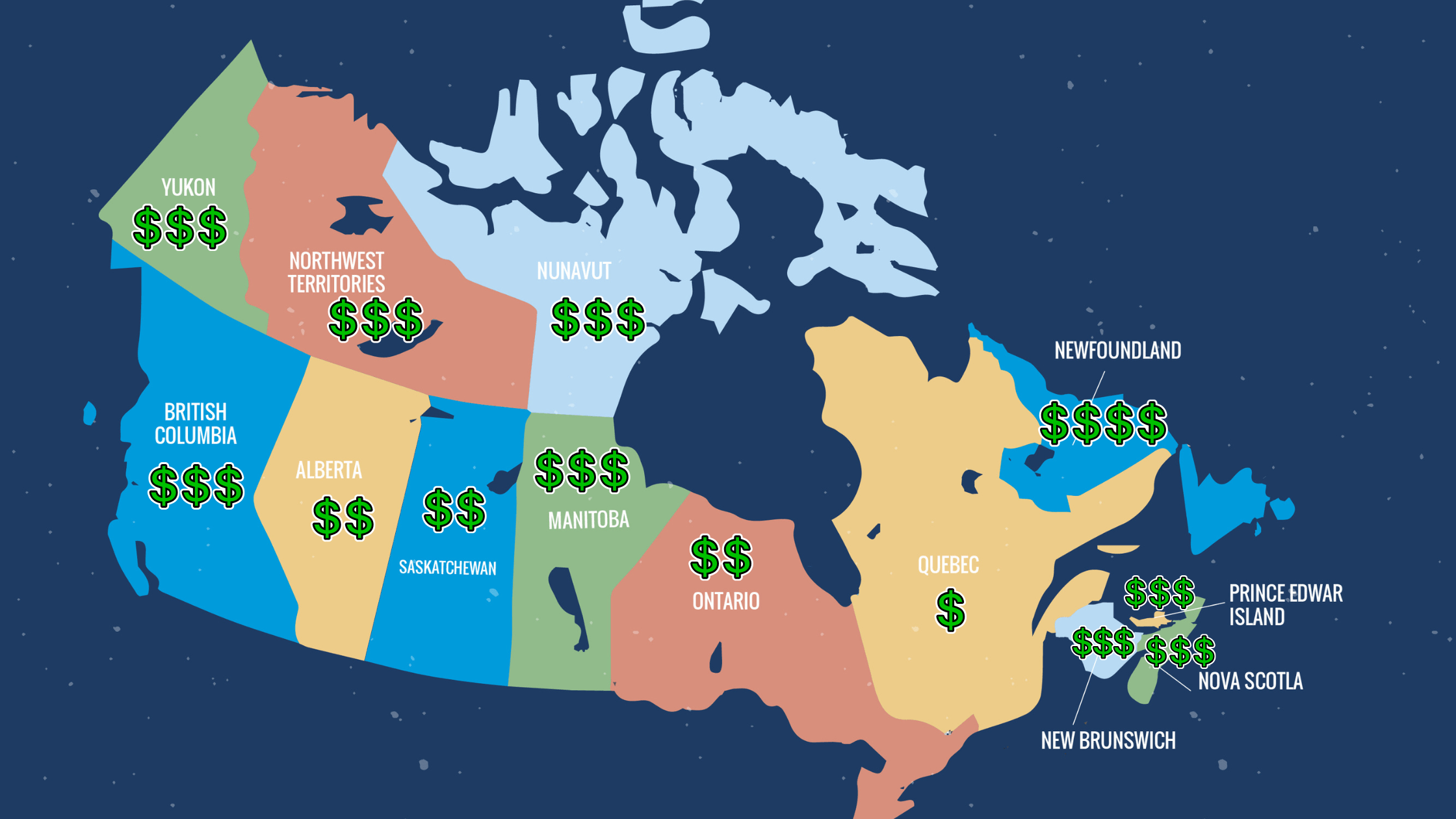
province pack price
How Much Is a Pack of Cigarettes in Canada? (2025 Price Guide by Province) 21

Below is an easy-to-read breakdown of how much a pack of cigarettes costs in every Canadian province and territory. These are typical prices for a fully taxed 25-pack purchased from a convenience store or gas station.

Western Canada

British Columbia (BC): $18–$20 per pack

BC has one of the highest provincial tobacco taxes, pushing retail cigarette prices close to the national top tier.

Want to save money on cigarettes? You’re in luck, buy cigarettes online in BC at Cigarette Express and save on average, 75% or $15.

Alberta (AB): $14–$18 per pack

Alberta cigarettes are cheaper than in most provinces due to moderate tobacco tax rates and no provincial sales tax (PST).

Want to save money on cigarettes? You’re in luck, buy cigarettes online in Alberta at Cigarette Express and save on average, 72% or $13.

Saskatchewan (SK): $16–$18 per pack

Saskatchewan sits in the middle range, with taxation slightly above Alberta but lower than Manitoba.

Want to save money on cigarettes? You’re in luck, buy cigarettes online in Saskatchewan at Cigarette Express and save on average, 72% or $13.

Manitoba (MB): $18–$20 per pack

High provincial tobacco taxes make Manitoba one of the pricier regions for smokers.

Want to save money on cigarettes? You’re in luck, buy cigarettes online in Manitoba at Cigarette Express and save on average, 75% or $15.


Central Canada

Ontario (ON): $15–$17 per pack

Ontario consistently offers mid-tier pricing, lower than Western and Atlantic provinces, and slightly higher than Quebec.

Want to save money on cigarettes? You’re in luck, buy cigarettes online in Ontario at Cigarette Express and save on average, 67% or $10.

Quebec (QC): $13–$15 per pack

Quebec is almost always the cheapest province in Canada for fully taxed cigarettes.

Want to save money on cigarettes? You’re in luck, buy cigarettes online in Quebec at Cigarette Express and save on average, 62% or $8.


Atlantic Canada

These provinces carry the highest tobacco taxes in the country.

Nova Scotia (NS): $19–$21 per pack

New Brunswick (NB): $18–$19 per pack

Prince Edward Island (PEI): $19–$20 per pack

Newfoundland & Labrador (NL): $21–$23 per pack

Newfoundland & Labrador holds the highest cigarette prices in Canada, driven by aggressive provincial taxation.

Want to save money on cigarettes? You’re in luck, buy cigarettes online in Newfoundland and Labrador at Cigarette Express and save on average, 78% or $18.


Territories

Yukon, Northwest Territories, Nunavut: $18–$21 per pack

Territorial prices are high due to tobacco taxes and increased freight costs for remote communities.

Want to save money on cigarettes? You’re in luck, buy cigarettes online in Yukon at Cigarette Express and save on average, 76% or $16.


Why Cigarette Prices Are So High in Canada

payment terminal
How Much Is a Pack of Cigarettes in Canada? (2025 Price Guide by Province) 22

If you’re wondering why the heck a pack is so expensive, the short answer is: taxes make up more than 70% of the price of a Canadian cigarette pack.

Here’s what affects the final shelf price.


1. Federal Excise Duty

This is the biggest pricing factor and applies uniformly across Canada.

As of April 1, 2025, the federal excise duty is: $0.95391 per five cigarettes (~19 cents each)

This translates to:

  • ~$3.80 in federal duty on a 20-pack
  • ~$4.75–$4.80 on a 25-pack

The federal government also increases this duty annually, in line with inflation. Additional special one-time increases sometimes appear in federal budgets, adding more cost per carton.


2. Provincial Tobacco Taxes

This is where the biggest differences between provinces appear. Every province sets its own rate, and these taxes pile on top of the federal duty.

Here is what provincial taxes look like on average per carton of 200 cigarettes:

  • Ontario: ~$37
  • Quebec: ~$41.80
  • Alberta: ~$40
  • Saskatchewan: ~$45
  • Manitoba: ~$59
  • British Columbia: ~$55
  • Nova Scotia: ~$60.04
  • New Brunswick: ~$56.25
  • Prince Edward Island: ~$58
  • Newfoundland & Labrador: ~$68
  • Territories: ~$55–$60

These taxes directly explain why Quebec smokes cost so much less than NL or NS.

Did you Know? A carton of 200 cigarettes bought online at Cigarette Express costs less than just the tax portion of a carton of cigarettes in any province. The lowest amount of provincial tax is in Ontario, which is $37 for every carton. You can buy a full carton of cigarettes for $34.99 with no tax, directly from Cigarette Express


3. Sales Taxes (GST, PST, HST)

After federal and provincial tobacco taxes are applied, Canadians still pay:

  • GST (5%)
  • HST (13–15%) in some provinces
  • PST (6–10%) in provinces such as BC, Saskatchewan, and Manitoba

These taxes apply to the final retail price, which already includes tobacco taxes, meaning smokers pay tax on top of tax.


4. Retail Markup & Brand Premiums

When we think about what goes into the price of a pack, we often forget that retailers also need to make money from the sale. 

Retailers such as convenience stores or smoke shops typically add a 10-15% markup on packs, which equates to about $1 to $2 a pack. Premium brands like Du Maurier or Marlboro can cost $1–$2 more per pack compared to budget brands.


Why Some Packs Are Cheaper (or More Expensive) Even Within the Same Province

Price differences inside each province come down to:

  • Brand (premium vs. value)
  • Retailer type (gas station vs. grocery store)
  • Pack size (20 vs. 25)
  • Local retail competition
  • On-reserve vs. off-reserve taxation

Some Indigenous-owned retailers legally operate with different tax structures, which is why carton prices can be significantly lower compared to fully taxed convenience-store pricing. Cigarette Express is an online smoke shop that is 100% Indigenous owned and operated, meaning it does not need to follow the same tobacco tax structure as the rest of Canada. This means we can offer quality smokes for up to 75% cheaper. No taxes or import fees = Huge Savings for our Customers!


How Import Duties Affect the Price of Cigarettes

Imported cigarettes (non-domestic brands) can face:

  • Additional excise duties
  • Special duties
  • Compliance requirements for stamping and packaging

For travelers bringing cigarettes into Canada, duty-free allowances apply only within limits. Beyond the exemption, federal excise, provincial tax, and special duties apply—often making foreign cigarettes more expensive than local brands. In Canadian airports, you’re only allowed 200 cigarettes duty-free before you’re subject to paying provincial taxes.


Why Cigarette Prices Keep Climbing Each Year

Gas, milk, and eggs aren’t the only consumables that keep getting pricier. Compared to what it was a decade ago, the price of cigarettes in Canada has shot up 50-100% over the past decade. It makes sense why more Canadians are finding it a habit that’s hard to justify. Vapes have increased in popularity, especially amongst Millennials and Gen Z, but they’re subject to the same taxes, and in many cases, aren’t a very affordable habit either. A myriad of factors contributed to the steady price hike of cigarettes and tobacco products:

1. Annual federal excise duty increases

Indexed to inflation, meaning prices rise even if nothing else changes.

2. Provincial tax adjustments

Often raised during provincial budgets for revenue and public-health goals.

3. Public health strategy

Higher cigarette prices strongly correlate with lower smoking rates, especially among youth.

4. Inflation and retailer costs

Everything from shipping to rent increases retail prices over time.


How Much Is a Pack of Cigarettes? (Cliffnotes Version)

If you want a fast, simple answer to the question “How much is a pack of cigarettes in Canada?”, here it is:

Canada-wide 2025 average:

  • 20-pack: $12–$16
  • 25-pack: $15–$23

Cheapest Province: Quebec


Most Expensive Province: Newfoundland & Labrador

Each province sets its own tax rate for tobacco products, which can contribute to a wide variance in the cost of a pack of cigarettes. Every 70 cents of a dollar for a cigarette pack is spent on taxes and duty fees.


Understanding How Much a Pack of Cigarettes Costs in Canada

Next time you’re comparing with a visitor on how much a pack of cigarettes costs, the accurate answer depends heavily on where in Canada they live.

While Canadians across the country deal with some of the highest cigarette prices in the world, the variation from $13 to more than $23 per pack is almost entirely due to tax policy, cost of distribution, and provincial legislation.

These prices will continue to rise as federal and provincial governments adjust tobacco taxes as part of ongoing public health and fiscal strategies.

As more Canadians learn about the benefits of buying cigarettes online from native smoke shops like Cigarette Express, don’t be one of the ones left behind on this life hack. Buying cigarettes online can take just a few minutes– and you’ll be saving hundreds, if not thousands, in the long run. Shop smarter, try it today at cigaretteepxress.ca 

Do Cigarettes Expire? Smoker’s Guide to Keeping Tobacco Fresh

Whether you’re a casual smoker or a daily user, you may have wondered: Do cigarettes expire? It’s a fair question. Tobacco is an organic product, subject to moisture loss, aroma degradation, and chemical changes over time. For smokers who enjoy buying in bulk, the real concern becomes: Will my cigarettes go bad, lose flavour, or become harmful if they sit for months or even years?. This guide walks you through the facts, storage tips, shelf‑life expectations, and how to keep your packs fresh as you got them.


Understanding What “Expiry” Means for Cigarettes

Unlike many food items or pharmaceuticals, most commercial cigarette packs do not carry an expiration date. Two years is the typical timeframe during which cigarettes can be stored if they’re in a dry and cool area.

The reason? Cigarettes are treated as durable goods rather than perishable products. According to a scientific review:

“Tobacco is a product with a limited useful life, which loses its original characteristics when the tobacco leaf deteriorates due to changes …” PMC

In practice, cigarettes don’t expire like milk—they age, dry out, or go stale. The result may be a rougher taste, harsher draw, or even higher risk of uneven burn. Even if your cigarettes are technically usable, they may not deliver the experience you expect. Similarly, cigars also don’t have an expiry date but those who’ve had them before know that once you leave a cigar out of the humidor, it tends to crumble quickly and the flavor completely goes off. Cigarettes are more forgiving in comparison to cigars, because they’re not wrapped in delicate tobacco leaf. However, they can still go stale after a long time, or if they’re not stored properly.


How Long Do Cigarettes Last?

Determining how long a pack of cigarettes lasts depends on several variables: storage conditions, whether the pack is opened, humidity, temperature, and exposure. 

Unopened Packs

If the pack is still sealed and stored properly, the cigarettes should be good for 1-2 years. Cigarettes are protected from moisture loss through two layers: the foil that protects the cigarettes, and the box that’s usually lined with cellophane. In most countries, it’s de facto not to have an expiry date on cigarettes. In fact, the German Cigarettes Association claim cigarettes can be good to smoke if “left unopened for decades”. So while “forever” may be a stretch, two years is a reasonable threshold for unopened products under good conditions.

Opened Packs

Once you break the seal, the clock ticks much faster. Moisture escapes, the foil seal is broken, and the tobacco is exposed to air and humidity. Realistically, opened packs should ideally be consumed within 6 months, and many smokers report noticeable degradation even after weeks or months.


What Happens When Cigarettes Degrade?

image
Do Cigarettes Expire? Smoker’s Guide to Keeping Tobacco Fresh 27

It’s easy to tell when milk’s gone bad; you give it a good whiff. But how can you tell whether cigarettes are expired if they don’t have an expiry date? Here’s how you know your cigarettes might be past their due date:

Key factors include:

  • Drying of the tobacco: Moisture is a key component of tobacco flavour and smooth burn. A dry cigarette may burn faster, taste harsher, and feel rougher on the throat. Indications of dry tobacco are yellowing of the paper and cracks.
  • Oxidation and loss of aroma: Over time, flavor compounds in the tobacco oxidize or evaporate, leaving dull aroma and less flavor.
  • Moisture or mould risk: High humidity or poor storage can cause mold or fungal growth inside a pack.
  • Uneven burn or filter issues: As wrapper moisture changes, burn rate and draw resistance can shift. Capsule‑style cigarettes (with flavour capsules) are especially sensitive

In short, the quality may degrade without necessarily creating new health risks (though smoking remains harmful regardless). The primary issue is the negative impact on the experience.


Characteristics of Tobacco: Does it Expire?

image 1
Do Cigarettes Expire? Smoker’s Guide to Keeping Tobacco Fresh 28

Tobacco is the main ingredient in cigarettes, and like any organic plant material, it can degrade over time. As tobacco ages, natural processes like fermentation and oxidation continue—even after harvesting and packaging. This gradual change affects the moisture content, aroma, and flavor of the cigarette.

One of the key factors behind this transformation is fermentation. It occurs more intensely in black tobacco (commonly used in stronger or European-style cigarettes) than in blond tobacco (which is lighter and more common in North America). While fermentation is essential during curing to enhance flavor and reduce harshness, it doesn’t completely stop after the product is sealed.

Because of this, tobacco inside a cigarette pack continues to evolve. When stored properly, the changes are slow and relatively subtle. But if the cigarettes are exposed to humidity or temperature fluctuations, the aging process speeds up, leading to a stale, dry, or unpleasant smoking experience.

The good news? Old cigarettes don’t “expire” in the way food or medicine does—they’re not likely to become dangerous. But they can become harsh, bitter, or lose their aroma entirely. As a smoker, you’ll probably notice the difference in taste, draw, and overall satisfaction long before the tobacco poses any real health risk.

How to Store Cigarettes to Keep Them Fresh

If you’re going to keep packs (or cartons) around, proper storage makes all the difference. Here are the best practices:

1. Avoid heat and high humidity

Avoid direct sunlight or heat sources like heaters. According to a study by Lee, Kim, Lee, and Yang (1986) conducted at the Korea Ginseng and Tobacco Research Institute, cigarettes absorb and lose moisture depending on the air humidity around them.

If the humidity is higher than 56%, cigarettes start to absorb moisture. If it’s lower than 56%, they begin to dry out. To keep cigarettes in good condition, they need to stay between about 7.7% and 14.5% moisture, which usually happens when the surrounding humidity is between 52% and 64%.

The ideal temperature to store cigarettes is typically between 15°C to 25°C (59°F to 77°F).

2. Keep them sealed

If unopened, keep the cellophane or foil intact. Once opened, reseal as much as you can (e.g., wrap inside a zip‑lock or keep in original foil). The package helps cigarettes retain moisture by a surprising amount. The Lee, Kim, Lee, and Yang (1986)  study showed how many days cigarette packing protected it from high temperatures and humidity.

When tested at 90% humidity and a hot temperature (40°C / 104°F), different packaging types protected the cigarettes for different amounts of time before they started to degrade:

  • Cellophane: ~19 days
  • PET plastic: ~33 days
  • OPP plastic: ~70 days
  • OPP with special coating: ~74 days

3. Avoid refrigeration or freezing

While it may seem like a good idea, fluctuations in temperature/humidity can cause condensation and damage the tobacco or wrapper. Storing cigarettes in the fridge can increase humidity and risk of moulding.

4. Avoid exposure to strong odors

Tobacco is porous: it can absorb smells from the environment, altering taste. Keep packs away from perfumes, cooking smells, or smoke.

5. Use a small humidor or resealable box if you have many packs

For serious collectors or smokers with multiple brands, investing in a small humidor (or a sealed container with a humidity pack) helps maintain ideal moisture.

6. Rotate your stock

If you buy in bulk, smoke the oldest packs first so they don’t degrade before you reach them.


How to Tell If a Pack Has Gone Bad

image
Do Cigarettes Expire? Smoker’s Guide to Keeping Tobacco Fresh 29

No one wants to smoke a stale pack. Here are visible, olfactory, and gustational signs that you have stale or spoiled cigarettes:

  • Yellowing or brown spots on the wrapper or filter.
  • Cigarette feels brittle or crumbles when handled.
  • Tobacco has an off or musty smell.
  • The taste is harsh, burnt‑or‑papery, or very different from when fresh.
  • Uneven burn or faster than normal burn rate.
  • For capsule cigarettes: flavour capsules may look dry, cracked, or even broken.
  • Some users report nausea, dizziness, or a stronger throat hit when smoking very old cigarettes. These may stem from increased harshness rather than added toxicity.

If you notice any of these signs, it’s wise to discard the pack or use it as a last resort rather than for enjoyment.


Myth vs Reality: Expired Cigarettes and Health Risks

Myth #1: “Expired cigarettes are more dangerous than fresh ones.”

Reality: The primary health risks of smoking come from tobacco combustion, tar, carbon monoxide, and other toxins, not necessarily from the age of the pack. That said, stale cigarettes may burn more unevenly or faster, which might increase inhalation of harsher compounds. A review stated:

“A significant deterioration in its quality … when older, which can increase the harmful effects on health that tobacco consumption already has.” PMC

Myth #2: “If they don’t taste good, they’re fine health‑wise.”

Reality: Taste and flavour are clues to degradation, but even a fresh‑tasting cigarette remains harmful. Always remember: smoking is risky no matter what.

Myth #3: “I’ll freeze them and they’ll stay fresh forever.”

Reality: Freezing can do more harm than good. Condensation and wrapper damage may actually lead to spoilage.


FAQs: Do Cigarettes Expire?

Q: Do cigarettes expire?
A: Although there is no official “expiration date” printed on cigarette packs, but they can go stale (loss of moisture and flavour). Tobacco, the primary ingredient in cigarettes is considered semi-perishable because it deteriorates over time, especially if stored in high temperature and high humidity environments.

Q: How long do cigarettes last unopened?
A: If stored properly, many sources say up to 1‑2 years.

Q: How long do cigarettes last after opening?

A: Once opened, freshness can deteriorate rapidly. Many consider 3‑6 months a reasonable maximum for acceptable flavour. 

Q: Can I still smoke very old cigarettes?
A: Yes—but the experience may be harsh, flavourless or uneven. The health risks remain high as with any cigarette.

Q: Do cheaper packs expire faster?
A: Not necessarily. Expensive cigarettes don’t necessarily have longer shelf life as they all primarily consist of tobacco.

Q: Are opened packs dangerous?
A: Not inherently more dangerous, but they may burn unpredictably or taste worse especially if left out for too long.

Q: What if I find a pack with no film seal?
A: Lack of factory seal means they’ve been exposed to air, potentially reducing freshness. If you’re concerned, discard or use soon.

Q: Can I improve flavour of stale cigarettes?
A: Some claim you can rehydrate stale cigarettes using humidors or damp paper towel methods, but the success of this method is questionable. It’s better to just toss old cigarettes and get new ones.


Smarter Smoking: Tips for Collectors, Bulk Buyers & Occasional Users

Buy smaller quantities if you smoke infrequently

If you’re a light smoker, buy single packs rather than cartons—this helps avoid stock going stale. Cigarette Express offers the option to buy packs or cartons at affordable prices on dozens of popular native smoke brands.

For bulk buyers:

  • Store cartons horizontally, not on edge, to keep filter end sealed.
  • Use resealable plastic bags or dedicated storage boxes for extra protection.
  • Label the carton with the purchase date so you rotate packs first‑in, first‑out.

For travel or on‑the‑go packs:

  • Use pack covers or resealable pouches to protect opened pack from humidity changes.
  • Avoid leaving a pack in a hot car, direct sunlight or near heaters.

Keeping rare or vintage packs:

If you collect packs for nostalgia or value, store them in climate‑controlled environment (13‑20 °C, humidity ~50%). Don’t smoke them, just preserve them. But remember they aren’t like cigars: they won’t age better, they’ll just hold flavour longer.


Why This Matters to You

Fresh‑tasting, properly stored cigarettes yield a smoother draw, better flavour, more predictable burn and more enjoyable experience. While they don’t “go bad” like perishable goods, quality drops over time but many smokers don’t realise this. Recognising the signs of staleness helps you have a better smoking experience or at least dispose of packs that no longer meet standards.

And if you’re purchasing online or in bulk, whether through specialty stores or for resale knowing storage and shelf life becomes business smart too.


Conclusion

So, do cigarettes expire? Not in the way milk or medication does. But they do degrade. They dry out, oxidize, and their flavour and burn characteristics change. The bottom line: if stored in a cool, dark, dry place, an unopened pack can last up to two years and still perform well. But opened packs are exposed and degrade much faster, typically several months before noticeable changes set in.

Want to keep your tobacco fresh and avoid that harsh, stale draw? Focus on storage: temperature, humidity, air exposure, and packaging matter more than you might think. If you find a pack that tastes off, smells stale, or burns weirdly—the wise move is to toss it, not suffer through it.

Smoking—even fresh—is harmful. While your storage might preserve flavour, it doesn’t mitigate risk. The best step for health is to quit. But if you choose to smoke, at least smoke something that is fresh and worth your time, money and satisfaction.

References

  1. Lee, Y.T., Kim, S.H., Lee, K.H., & Yang, K.K. (1986). Study on Shelf Life of Packaged Cigarettes. Korea Ginseng and Tobacco Research Institute, Taejon (Korea R.), Volume 8, Issue 1.
  2. U.S. National Library of Medicine. (2023). Tobacco Smoking: Health Effects and Chemical Composition. https://www.ncbi.nlm.nih.gov/books/NBK530184/
  3. Centers for Disease Control and Prevention (CDC). (2021). Cigarette Ingredients and Where They Go. https://www.cdc.gov/tobacco/basic_information/
  4. World Health Organization (WHO). (2019). Tobacco Product Regulation: Building Laboratory Testing Capacity. https://www.who.int/publications/i/item/9789241516204
  5. Tobacco Storage Guidelines from University of Kentucky Agricultural Extension (2022).

  1. De Granda‑Órive, J. I., Solano‑Reina, S., Jiménez‑Ruiz, C. A., et al. (2022). Should cigarette packs and electronic cigarettes indicate the expiration date of their product? Open Respiratory Archives, 4(3), 100186. https://doi.org/10.1016/j.opresp.2022.100186 pmc.n

How Many Cigarettes are in a Pack? Answering your Top Questions

If you’re ever confused about how many cigarettes are in a pack, you’re not alone. This seemingly simple question turns out to have several nuances, depending on the country, brand, and regulations. In this post, we’ll explore standard pack sizes, variations around the world, factors that drive different pack size variations, and answer common questions that smokers and buyers often have.

Standard Pack Size: 20 Is King

In most markets, including North America, Europe, and some parts of  Asia, the minimum number of cigarettes per pack is 20. This configuration has become the de facto norm worldwide. 

Why 20? It balances manufacturing costs, packaging, portability, and regulation. Before the 1960s, it was common to have smaller cigarette packs, reflective of the limited production capabilities of the time. Many tobacco laws and tariffs historically became structured around 20-stick packs after the boom in the sixties, when cigarette sales in America reached an all-time high. 

A standard, “king-sized” cigarette is around 84mm in length and 8mm in diameter. The height of a standard cigarette pack is around 85mm, which is only 1mm longer than the cigarette, creating a compact environment to carry 20 perfectly sized cigarettes. The width of a standard pack is around 55mm and has a depth of 22mm.

That said, while 20 is the most common, it’s not the only pack size in existence.

Other Cigarette Pack Sizes: 10s, 25s, 200s

Some brands or regions experiment with different pack counts, such as:

  • 10 cigarettes per pack – sometimes used for trial or promotional packs. More popular in some countries than others.
  • 25 cigarettes per pack – found occasionally in certain countries, and is quite popular in Canada.
  • 200 stick packs – This is more common for cigarillos when bought in bulk.

**In Canada specifically, it is common to find both 25 and 20 packs. A 25-pack will contain slightly smaller cigarettes, and the box is slightly deeper and longer to accommodate the 5 extra cigarettes.

Pack Size by Region

The government regulates cigarette pack sizes. Different countries have different rules when it comes to how many cigarettes can be in a pack. Here are some examples of how pack sizes differ from country to country.

Canada and the USA: 20s and 25s are both common.

Example: Canadian Lights in 20s, Canadian Ultra Blue Silver in 25s. Popular US brands like Marlboro and Export A have some variations with 25s.

UK & EU: Regulated at 20 cigarettes per pack to discourage excess smoking.

Australia: Ranges from 20, 30, 40, and 50 pack sizes to remain visible on the market after tightening regulations.

India: Primary pack size is 10, but also sold in 12,16, and 20. 75% are sold in single sticks.

Southeast Asia: Varies by country, but a common pack size in certain countries is 20. Some countries offer “Kid packs” of 5.

Japan and China: Standard is 20-packs, with some markets selling 10 packs.

Russia and Georgia: A Strict rule of 20 per cigarette pack.

Middle East: Commonly sold in 20s.

Why Pack Sizes Vary in Different Regions of the World

The variance in pack sizes around the world comes down to a few things: Government regulation, consumer behavior, and market competition. In order to fully understand, we must explore these myriad of factors.

Local regulation: Regulations on tobacco sales are generally associated with profitability and public health risk. Many countries, like Canada and the USA, have very strict tobacco laws on tobacco advertising and the maximum number of cigarettes per pack. It’s been shown in some studies that reducing the number of cigarettes per pack would reduce the amount of smoking. This is why for so many regions around the world, the pack of 20 has become standardized. Some countries also make money on tobacco sales through taxes, so it could be beneficial to have standardized pack sizes.

Consumer Behavior: Pack sizes can influence consumer habits. For example, in Canada, 25 packs are the most common, making up 71% of sales. Most people prefer larger packs because they last longer. In certain countries in Southeast Asia, where smoking is more prevalent among kids and teenagers, pack sizes may be smaller to curb their consumption or fit their needs.

Market Competition: Pack sizes are an important marketing tool for tobacco companies. They can produce different pack variations to attract different segments of customers and to keep their brand top-of-mind and interesting to consumers. Because of new restrictions on tobacco advertising, pack sizes have become another way to differentiate brands on the market. Variations in pack sizes can also help keep pricing competitive, offering a product for any budget.

From Packs to Cartons: Doing the Math

A carton is a bundle of several packs. The number of packs may vary per carton, but the number of cigarettes is typically the same – 200 cigarettes per carton. 

The typical structure:

  • 10 packs per carton (if each pack contains 20, that’s 200 cigarettes per carton).
  • If a pack holds 25 cigarettes, then a standard carton would have 8 × 25 = 200 cigarettes.

Buying by the carton usually gives you a lower per-cigarette cost, making it popular among frequent smokers. At Cigarette Express, our standard cartons cost $35, which makes each pack only $3.50, and each cigarette (3.50/20) is 18 cents!

Why Pack Size Matters

Pack size affects you in several ways:

  1. Cost structure & pricing – Costs and taxes are often built per pack, so pack size influences price per cigarette.
  2. Consumption behavior – Larger packs may encourage heavier smoking due to the “bulk effect.”
  3. Convenience & portability – A pack of 20 is more pocket-friendly than a massive 50-stick box.
  4. Legal & regulatory compliance – Many jurisdictions mandate a minimum or maximum pack size to discourage small, impulse purchases.

A Closer Look: Canada & Tobacco Regulation

In Canada, cigarette packaging and counts are influenced heavily by health warnings, plain packaging laws, and taxation. There are taxation guidelines on cigarettes for singles, packs of 20, packs of 25, and carton of 200 cigarettes. Taxation amount can vary from province to province. As of July 2021, the tax scheme in BC for cigarettes is as follows:

Cigarettes andtobacco sticks 32.5 cents per cigarette or tobacco stick$6.50 per pack of 20$8.13 per pack of 25$65.00 per carton of 200

While browsing our catalogue, you’ll find both “packs of 25” and “packs of 20” offerings. Check out our entire range of cigarettes at Cigarette Express.

FAQs: How Many Cigarettes in a Pack?

Q: Does every cigarette pack have 20?
A: No, though 20 is the standard in many places. Some packs contain 10, 25, or even more, depending on the brand and region.

Q: What about cartons—how many cigarettes then?
A: Typically 200 (10 packs of 20). If the pack is 25 cigarettes, then a carton would contain 8 packs.

Q: Is it legal to sell packs with fewer than 20 cigarettes in Canada?
A: Regulations vary by province and import rules. Many regions restrict very small packs, but exceptions or legacy packs may exist. Cigarettes in Canada are taxed by the individual cigarette, pack of 20, pack of 25, or carton.

Q: Why do Canadian packs sometimes have 25?
A: It’s partly preference and partly a packaging choice to differentiate product lines. Some domestic brands default to 25-stick packs. 71% of Canadians buy 25-packs versus 20s.

Q: Does a larger pack lead to more smoking?
A: Some research suggests that the more cigarettes you have readily available, the more you might consume—but results vary.

Q: How many cigarettes are in a “king-size” pack?
A: The term king size refers to length (usually ~ 84 mm), not the count. King-size packs still typically contain 20 king-sized cigarettes.

Q: Can I buy different pack sizes online in Canada?
A: Yes. At Cigarette Express, you’ll find both 20- and 25-cigarette packs across many brands. For some products, you’ll find both 20s and 25s packs.

Tips for Buyers & Smokers

  • Check both stick count and nicotine/tar specs before buying.
  • Cartons often offer better value, so if you smoke regularly, they can save money.
  • Watch regional regulations—some provinces may restrict pack types or impose higher taxes.
  • Store properly—cigarettes in larger or unusual packs may dry out if not sealed well.

Final Thoughts

So, to answer the burning question: in most cases, there are 20 cigarettes in a pack. But remember: depending on region, brand, and legislation, you might see packs of 10, 25, or more. The best approach is always to read the packaging label.

If you’re shopping for cigarettes in Canada, make sure to check out our full catalog at Cigarette Express. We carry a broad selection of packs, cartons, and brands, so you can find the right fit for your needs.

Shopping cart0
There are no products in the cart!
Continue shopping
0